
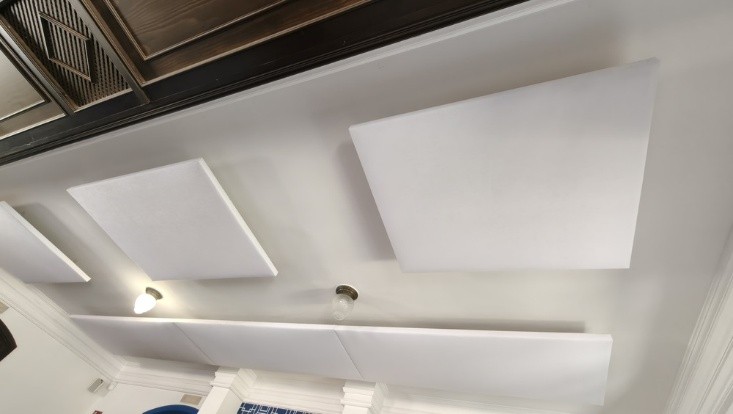
Tile suits most rooms, and panels suit the rooms tile struggles with. Tile is the standard modular unit that drops into a grid. Panel is the broader term, covering larger formats and specialty shapes. For acoustic ceiling tiles in Northern Minnesota, the real question is usually moisture, not appearance. Ice dams and spring thaws are a common source of ceiling leaks.
Northern Wisconsin adds a different mix: lodges, resorts, and schools where summer humidity and winter dryness both show up. The same logic holds for acoustic ceiling panels in Northern Wisconsin, where a ceiling has to handle both seasons without sagging or staining.
Start With the Moisture Question
Mineral fiber tile absorbs water and sags. Rooms with leak history, kitchens, and entryways need moisture-resistant products, so settle that before choosing a finish. Fiberglass and specialty products resist humidity better than standard mineral fiber, usually at a higher price.
| Feature | Standard tile | Large or specialty panel |
| Format | Modular units that drop into a grid | Larger boards, clouds, and baffles |
| Repair | Swap one unit | May need adjacent sections removed |
| Best rooms | Offices, classrooms, corridors | Gyms, lobbies, open plans |
| Sound control | Wide NRC range | High-NRC options for loud rooms |
Most rooms need tile. Panels earn their place when the room is large, loud, or visible enough to justify the extra planning.
Upkeep matters too. Washable surfaces suit kitchens and healthcare corridors, while standard tile prefers a dry vacuum and a gentle hand. Ask for the maintenance guidance before you order, since the easiest ceiling to live with is the one your facilities team already knows how to clean.
Weigh the Grid Before the Tile
Many schools and clinics in the region carry grids that predate current acoustic expectations. Before choosing acoustic ceiling tiles in Northern Minnesota, check the grid they will hang in. It should be level, undamaged, and rated for the new weight. Reusing a sound grid saves money. Forcing tile onto a tired one does not.
Lead times differ as well. Standard tile is widely stocked, while large formats and custom shapes can take weeks to arrive. Build that wait into the project calendar, especially if the work must finish before school resumes or a lodge opens for the season.
Match NRC to the Room
Higher noise reduction ratings suit gyms and cafeterias. Small offices often feel better with moderate ones, since very high absorption can leave a room sounding flat. Schaefer Acoustics matches the rating to the room’s size and use, then checks the tested value with the manufacturer. Color deserves a quick word too. White reflects light, while darker finishes hide the grid and mechanicals but ask for more lighting.
Choose for the Winter, Not the Showroom
Northern buildings spend much of the year sealed against the cold and the rest drying out. Choose the tile or panel that handles that cycle, confirm the grid underneath, and pick the finish last. Schaefer Acoustics works in that order, and the ceilings tend to outlast the arguments about color.
Answers to Common Questions
What is the difference between ceiling tile and ceiling panels?
Tile usually means standard modular units that drop into a grid. Panel is the broader term and can include larger formats, baffles, and specialty shapes. Every tile is a panel, but not every panel is a tile, so specifying by size and mounting method avoids confusion.
How do ice dams affect ceilings?
Ice dams can push meltwater under roofing and into the building, staining or sagging tile below. The roof problem has to be fixed first. Then we replace the damaged tile and check the grid for rust or movement before closing the ceiling back up.
Is a higher NRC rating always better?
No. Very high ratings suit loud rooms such as gyms and cafeterias, but they can make a small office feel flat. Match the rating to the room’s size and use, then confirm the product’s tested value with the manufacturer before ordering.
Can new tile go into an old grid?
Often, if the grid is level, undamaged, and rated for the new tile’s weight. Older grids sometimes need repair or adapters first, so we inspect before ordering. That check avoids delays and keeps replacement costs from growing midway through the project.
Which is easier to repair, tile or panels?
Standard tile is usually easier, since you lift out one unit and drop in a replacement. Larger or specialty panels can require removing adjacent sections, so repair access is worth weighing during selection, especially in rooms where leaks have happened before.
