
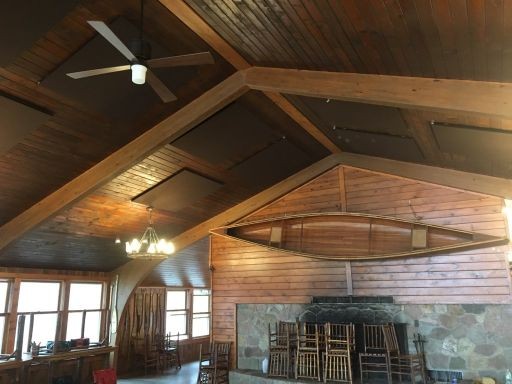
Every ceiling project claims to be customized these days. That has made the word nearly meaningless. A genuinely custom ceiling solution starts with a conversation about how a room actually gets used. It does not start with a catalog page.
We build custom ceiling solutions in Wisconsin for architects and building owners who bring us a specific problem already in mind. It’s rarely a blank request for something nice. That starting point changes how the whole project gets scoped.
The Consultation Comes Before the Catalog
Most custom projects start with a walkthrough focused on function. How loud does the room get? What’s happening above the ceiling? What does the space need to look like once it’s finished?
Only after those answers are clear do we start narrowing down actual products. Starting with a product catalog tends to bias the conversation toward what’s available, not what’s needed.
Where Acoustical Ceiling Tile in Northern Wisconsin Fits the Process
A standard acoustical ceiling tile in Northern Wisconsin that commercial buildings often use is not a compromise within a custom project. It is frequently the right answer once acoustic and budget requirements are mapped out.
Custom does not automatically mean expensive or unusual. Sometimes the most tailored solution for a space is a well-chosen standard product, installed correctly.
When a Project Actually Needs Something Non-Standard
Custom work becomes genuinely necessary in a few cases. A room might have an unusual shape. A client might want a specific design element echoed in the ceiling. Acoustic requirements might exceed what standard tile alone can meet.
In those cases, we combine product lines. We might mix acoustic backing with a specific finish, or blend tile with linear metal accents, rather than forcing one product to do more than it’s built for.
What Drives Timeline on a Custom Project
Custom components generally take longer to source than standard tile. Design decisions need to be finalized earlier in the process too. A project built around standard products can often move faster once scope is confirmed.
We flag that timeline difference clearly during the initial consultation, so a design decision does not quietly become a scheduling problem later.
Why We Start With the Room, Not the Product
A custom solution that starts with an available product line tends to produce compromises the client never asked for. Starting with the room’s actual requirements works better.
From there, we work toward the right product, standard or otherwise. That order produces a result closer to what the client actually needed.
Custom Is a Process, Not a Price Tag
The word custom describes how a project gets planned. It does not automatically describe what it costs or how unusual the final product looks.
For custom ceiling solutions in Wisconsin, Schaefer Acoustics treats every project as a custom process. We map function and budget before reaching for a catalog, whether that process lands on a standard tile or something built specifically for the room.
Frequently Asked Questions
Does custom always mean a more expensive ceiling?
Not necessarily. A custom process can lead to a standard, cost-effective product once the room’s actual requirements are mapped out. Custom describes the planning approach, not automatically a higher price point.
How long does a custom ceiling project typically take?
It depends on whether the final solution uses standard or specialty components. Standard products move faster once scope is confirmed. Custom or blended combinations generally need longer lead times.
What makes a project need a non-standard ceiling solution?
Unusual room shapes, specific design requirements, or acoustic needs a single standard product can’t meet usually call for a blended or custom approach.
Do you work directly with architects on custom projects?
Yes. Many custom projects start with an architect’s design intent. We work through material and acoustic requirements together before finalizing a plan.
Is acoustical ceiling tile ever the right choice within a custom project?
Often, yes. Once acoustic and budget requirements are mapped out, a well-chosen standard tile frequently turns out to be the right fit, even within an otherwise custom-planned project.
